Luminant Revital-Eye Stick
3-in-1 correcting eye stick
skin care
5 min read

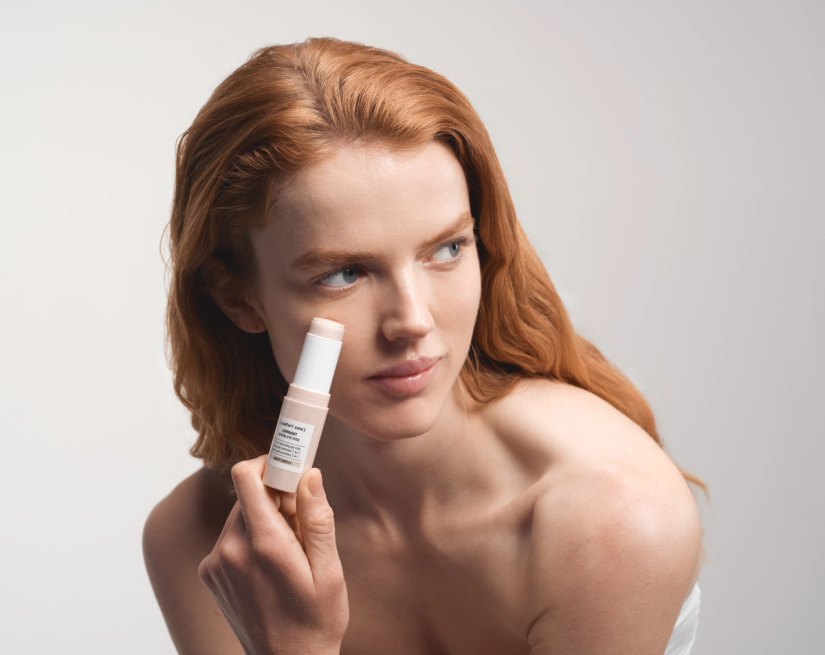
Dark circles can have very different causes. Excess pigment, visible blood vessels beneath thin skin, swelling, or a loss of tissue tone and support can all contribute. The four types of dark circles are pigmented, vascular, structural/hollow, and lifestyle-induced. This is why many routines miss the mark. Trying to lighten the area, for example, won’t help if pigment isn’t the main cause. Dermatological research describes dark circles as a multifactorial condition with no universal treatment.
Dark circles are changes in color visible under the eyes and sometimes on the upper eyelid. They are often referred to as periorbital hyperpigmentation, although this term describes only part of the phenomenon. Not all dark circles are caused by excess melanin, the pigment that gives skin its color.
According to recent reviews, dark circles:
These factors often overlap.
Bags under the eyes are related but distinct. They are mainly associated with puffiness or swelling and can make dark circles appear more pronounced by creating additional shadows. Reducing puffiness, however, does not correct pigmentation, just as lightening the skin does not eliminate under-eye bags.
*Santos MO, Sequeira ML, Silva R. Is there a gold standard for treating periorbital hyperpigmentation? – A narrative review of the latest evidence. J Cutan Aesthet Surg. 2025;18:243-51. doi: 10.25259/JCAS_95_2024 **Sarkar R, Ranjan R, Garg S, Garg VK, Sonthalia S, Bansal S. Periorbital Hyperpigmentation: A Comprehensive Review. J Clin Aesthet Dermatol. 2016 Jan; 9(1):49-55. PMID: 26962392; PMCID: PMC475687
There is no single cause of dark circles.
Age: With age, the skin around the eyes becomes thinner and loses collagen and elasticity. Changes in facial fat and tissue support can make blood vessels more visible and the under-eye groove more pronounced.
Genetics: Genetics influence pigmentation, anatomy, and the tendency to develop dark circles. But DNA does not tell the whole story, through epigenetic mechanisms, environment and lifestyle can influence how genes are expressed and how skin behaves without altering the DNA sequence itself. Allergies can also cause congestion, inflammation, and frequent eye rubbing, which may irritate the skin and contribute to post-inflammatory pigmentation.
Sleep: The relationship between sleep and dark circles is also more complex than it may seem. Sleep deprivation can make puffiness and signs of fatigue more noticeable, but better sleep cannot change genetic predisposition, fill an under-eye groove, or remove established pigmentation. As highlighted in the article “Cues of Fatigue: Effects of Sleep Deprivation on Facial Appearance”*, sleep appears to affect how visible dark circles are rather than being a direct cause. Sun exposure, dehydration, smoking, alcohol, and an unbalanced diet can also make dark circles more noticeable. Screen time is more likely an indirect factor: it can disrupt sleep, strain the eyes, or lead to more frequent rubbing, but there is no strong evidence that screens directly cause dark circles.
*Sundelin T, Lekander M, Kecklund G, Van Someren EJ, Olsson A, Axelsson J. Cues of fatigue: effects of sleep deprivation on facial appearance. Sleep. 2013 Sep 1; 36(9):1355-60. doi: 10.5665/sleep.2964. PMID: 23997369; PMCID: PMC3738045.
There are four types of dark circles, although several components often overlap.
| TYPE | WHAT IT LOOKS LIKE | PRIMARY CAUSE |
| Pigmented Dark Circles | Brown or grayish-brown | Melanin buildup |
| Vascular Dark Circles | Blue or purplish | Visibility of vessels and hemoglobin derivatives |
| Structural/Hollow Dark Circles | Shadow or sunken area | Tear groove and reduced tissue support |
| Lifestyle-Induced Dark Circles | Darker, duller, or puffier appearance | Sleep deprivation, stress, dehydration, and other lifestyle factors |
Pigmentary dark circles are usually brown or grayish-brown and result from excess melanin in the skin. They may be genetic or linked to sun exposure, dermatitis, irritation, or frequent rubbing, which can cause post-inflammatory hyperpigmentation. They are often more noticeable and persistent in medium-to-dark skin tones. If the color stays fairly consistent as lighting changes, pigmentation may be the main cause.
Vascular dark circles tend to look blue or purple and are caused by blood vessels showing through the thin, translucent skin around the eyes. Hemoglobin breakdown can also contribute to the darker color. Fatigue, allergies, congestion, and swelling can make them more noticeable.
The tear groove is the key feature here. This depression from the inner corner of the eye to the cheek can become more pronounced with age as volume, skin elasticity, and tissue support change, creating shadows that vary with lighting. Skincare can smooth and brighten the area, but it cannot replace lost volume. When anatomy causes the shadow, skincare may soften its appearance but cannot eliminate the underlying structure.
Because dark circles can have different causes, there is no universal treatment. However, there are targeted routines for each type that can help fade discoloration, hydrate the skin, smooth fine lines, and reduce the appearance of puffiness. Results are gradual and often become more noticeable with consistent use. Since the eye area is thin and delicate, using too many or overly aggressive products can cause irritation, dryness, and inflammation, potentially worsening pigmentation. The key is to choose the right approach and stick with it.
Puffiness, dehydration, loss of firmness, and discoloration require different approaches, often combined in the same formula.

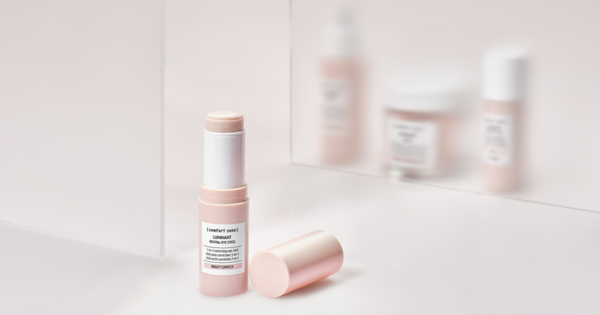
An eye stick’s benefits come less from its shape than from the way the format makes application precise, pleasant, and easy to repeat. The cooling contact and gentle massage can help support microcirculation and reduce the appearance of puffiness, while formulas designed for the delicate eye area evenly distribute moisturizing, smoothing, and brightening ingredients.
Compact, mess-free, and easy to use, a brightening eye stick for dark circles, such as the new Comfort Zone Luminant 3-in-1 Eye Stick, can be applied in the morning, throughout the day, or after travel whenever the eye area needs a fresher, brighter look. Its biggest advantage may simply be convenience, even the best formula can only deliver results when used consistently as part of a daily skincare routine.
Dehydrated skin can make fine lines and uneven texture more noticeable, making the under-eye area look darker and more shadowed, especially because the skin here is thin and delicate. That makes choosing the right hydrating ingredients especially important. Not all hyaluronic acid works the same way. Molecular weight and formulation affect how it interacts with the skin. In Luminant 3-in-1 Eye Stick, 0.1% micro hyaluronic acid helps improve hydration, smoothness, and radiance without adding heaviness to an area prone to puffiness. For deeper hydration across the face, the routine can also include Comfort Zone’s Hydramemory Water Source Serum. While hydration does not directly treat pigmentation, it can improve the skin's overall texture and make dark circles less noticeable.
Daily sun protection is essential, especially when dark circles have a pigmentary component. Use a broad-spectrum SPF 30 or higher, even on cloudy days, and choose a formula that is well tolerated around the eyes. During peak UV hours, from 10 a.m. to 2 p.m., add sunglasses with UV protection, a hat, and shade whenever possible. For added hydration and radiance, Hydramemory Hybrid Glow SPF30 combines UVA/UVB filters, macro hyaluronic acid, and prickly pear extract. Its color-adaptive pigments help create a more even, radiant complexion. After one hour, skin was 24.2 times more hydrated*; after seven days, 100% of subjects’ skin felt smoother** and 90% had a brighter, more even complexion**. For higher protection, Luminant Defense Fluid SPF50 protects against UVA and UVB rays and urban pollution, while hop extract helps counteract the appearance of discoloration. Both can complement Luminant 3-in-1 Eye Stick: daily SPF helps prevent pigmentation from becoming more pronounced, while the stick’s illuminating microbeads immediately reduce the appearance of contrast around the eyes.
*Independent laboratory, instrumental evaluation, 20 subjects. **Independent laboratory, self-assessment, 20 subjects, 7 days of use
Morning: After gentle cleansing, apply Luminant Serum, a concentrated treatment with ginger extract and 4-butylresorcinol, followed by Luminant Cream with Melano-Hexapeptide and brightening particles. Both use 3-Bright Technology™ to help improve uneven tone and radiance. Luminant Cream provides a 39% increase in radiance after one application*. For an antioxidant boost, Luminant Serum can be alternated with /skin regimen/Lx Vitamin C Serum, which contains 15% pure vitamin C and Longevity Complex and provides a 30% increase in radiance after one application**. Finish with broad-spectrum SPF, then apply Luminant 3-in-1 Eye Stick to the upper and lower eyelids, moving from the inner to outer corner. Its Bright Complex combines coleus extract, cornflower water, and micro mineral pearls, while micro hyaluronic acid supports hydration. The eye area appears instantly fresher, smoother, and brighter, with a 22.9% increase in radiance after one application**.
Evening: Cleanse, then apply Luminant 3-in-1 Eye Stick to the eye area. Follow with the Renight treatment that suits your skin, such as Renight Cream for comfort and softness or Renight Mask for more intensive care. For extra nourishment, mix a few drops of Renight Oil into the cream. Goji and macadamia oils, tomato extract, and hyaluronic acid help support the skin barrier, nourishment, and smoothness.
*Independent laboratory, instrumental evaluation, 30 people, after a single application of Luminant Cream. **Independent laboratory, instrumental evaluation, 20 people, 1 application
The new Luminant 3-in-1 Eye Stick is the hero of the Luminant 2026 launch. This corrective treatment is designed specifically for the delicate eye area to brighten, refresh, and reduce the appearance of dark circles, puffiness, and fine lines. Its fresh, melting balm texture glides easily over the skin, while the stick format provides a gentle massage that helps awaken the eye area. The Bright Complex combines mineral microbeads, coleus extract, and cornflower water. The microbeads create an immediate pearlescent glow, coleus extract helps reduce the appearance of puffiness and dark circles, and cornflower water provides a soothing, refreshing effect. Micro hyaluronic acid supports hydration and smoother-looking skin. The results are both immediate and progressive. One application produced a 22.9% increase in brightness*. After 28 days of use twice daily, clinical testing showed a reduction in the color of dark circles and the volume of puffiness**. Fragrance-free, ophthalmologically tested, and suitable for all skin types and phototypes, including sensitive skin, Luminant 3-in-1 Eye Stick can be used morning and evening or reapplied throughout the day, including over makeup. For application, glide the stick across the upper and lower eyelids in half-moon movements from the inside out. For an extra cooling effect, store the stick in the refrigerator. The chilled formula provides an instant burst of freshness and hydration, making it especially refreshing in the morning, after travel, or whenever eyes look tired.
* Independent laboratory, instrumental evaluation, 20 subjects, after 1 application ** Independent laboratory, clinical evaluation, 20 subjects, 2 applications per day, 28 days of use.
Brightening works best alongside hydration, which helps keep the delicate skin around the eyes smooth, comfortable, and better able to reflect light. Luminant 3-in-1 Eye Stick provides targeted radiance, while Hydramemory supports overall skin hydration.
Luminant helps brighten the eye contour, while Hydramemory helps keep the surrounding skin hydrated, smooth, and healthy-looking. A radiant look does not depend only on the color of dark circles, but also on the quality of the skin around them.
What causes dark circles under eyes?
Dark circles can be caused by pigmentation, visible vessels through thin skin, swelling, loss of volume, genetics, age, and lifestyle factors.
What are the different types of dark circles?
The main types are pigmented, vascular, structural, and lifestyle-induced. Recognizing the type helps choose a more targeted routine.
Does sleep deprivation cause dark circles?
Lack of sleep can make swelling, dark complexion, and signs of fatigue more noticeable, but it is rarely the only cause. It does not change genetic pigmentation or anatomical characteristics.
Can dark circles under eyes be permanently removed?
Skincare can improve color, hydration, radiance, and puffiness under the eyes. Structural components may require professional treatments.
What is the best skincare routine for dark circles?
An effective routine includes gentle cleansing, brightening treatments, eye-area products, hydration, and daily sun protection. Consistency is essential to achieve progressive results.
Does an eye stick really help with dark circles?
Yes, when it combines targeted active ingredients, hydration, freshness, and an immediate brightening effect. It does not act on every cause, but it can make the eye area smoother, brighter, and visibly less fatigued.
3-in-1 correcting eye stick
Smoothing eye contour cream
Radiance eye cream
Multi-action eye contour cream
Reusable eye patches