Sun Soul Face Cream Spf30
anti-aging face sun cream
skin care
Christine Lee | Comfort Zone Master Educator
5 min read

Sun exposure isn't just a summer concern. UV rays reach your skin every day, through windows, on cloudy days, and during everyday activities like driving, walking, or spending time outdoors. Sensitive skin often shows the effects first. Tightness, redness, lingering warmth, or irritation can appear even without a visible sunburn, because sensitive skin responds to cumulative exposure and environmental stressors, not only to long days at the beach. As a natural storyteller, skin can reveal the traces of what it lives through before we even realize it.For years, sunscreen was treated as something reserved for vacations and pool days. In reality, daily protection is essential, especially for sensitive skin. The goal isn't to react after damage occurs; it's to help prevent irritation before it starts. A good sun care routine should feel comfortable enough for everyday use while providing reliable protection. The question isn't just what SPF to wear at the beach; it's whether your skin is protected from the sun's daily exposure.
Sensitive skin has a lower tolerance for environmental stressors. It often reacts first to heat, dehydration, friction, and UV exposure. When the skin barrier is compromised, moisture escapes more easily and irritants can penetrate more readily, leading to increased dryness, sensitivity, and visible irritation. Sun exposure can amplify these effects. While UVB rays are primarily responsible for sunburn, UVA rays make up 95% of the UV radiation that reaches the Earth's surface. They penetrate through clouds and glass, are present year-round, and can contribute to oxidative stress, uneven pigmentation, loss of elasticity, and gradual weakening of the skin barrier.* Skin tone also influences how skin responds to UV exposure. The Fitzpatrick scale categorizes skin based on how easily it burns or tans. Melanin provides some natural protection by absorbing UV radiation, but the amount and type of melanin vary between individuals. Darker skin typically contains more eumelanin, which offers greater UV protection, while lighter skin contains more pheomelanin, which is associated with increased susceptibility to UV-induced damage.** Regardless of skin tone, daily sun protection remains essential. For sensitive skin, effective sun care goes beyond SPF alone. Formula, tolerability, and overall skin support matter just as much as the level of protection.
That's why the ideal routine follows three essential steps:
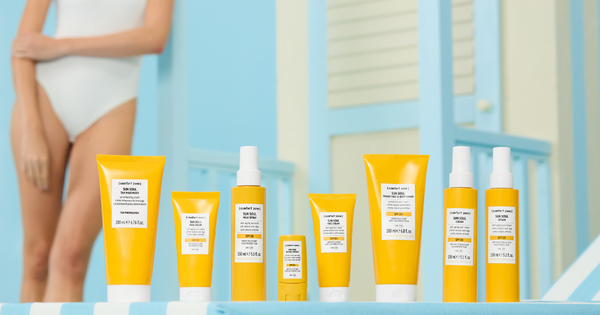
This approach is the foundation of the SUN SOUL collection from Comfort Zone, which combines broad-spectrum UVA/UVB protection with nano-free, skin-friendly formulas (free of oxybenzone and octinoxate) designed for daily use.
*Biniek K, Levi K, Dauskardt RH. Solar UV radiation reduces the barrier function of human skin. Proc Natl Acad Sci U S A. 2012 Oct 16; 109(42):17111-6. doi: 10.1073/pnas.1206851109. Epub 2012 Oct 1. PMID: 23027968; PMCID: PMC3479513.**D'Orazio J, Jarrett S, Amaro-Ortiz A, Scott T. UV radiation and the skin. Int J Mol Sci. 2013 Jun 7; 14(6):12222-48. doi: 10.3390/ijms140612222. PMID: 23749111; PMCID: PMC3709783.
For years, the assumption was simple: sensitive skin needs mineral sunscreen. While mineral filters such as zinc oxide and titanium dioxide can be effective and well tolerated, the type of filter alone does not determine how well a sunscreen performs.* What matters most is the formula as a whole, broad-spectrum UVA/UVB protection, photostability, skin tolerability, texture, and everyday wearability. Mineral filters may leave a visible white cast or require heavier textures, while chemical filters vary widely in their performance and tolerability. Some have raised concerns related to absorption and safety assessments, which is why formulation quality matters more than broad categories.** The most advanced sunscreens now focus on photostable, broad-spectrum filters and carefully calibrated formulas that deliver high protection without unnecessary stress on the skin barrier. Less formula burden does not mean less protection, it means smarter protection.
This philosophy guides SUN SOUL by Comfort Zone. Rather than relying on a mineral-only approach, SUN SOUL combines high-performance UVA/UVB protection with lightweight textures and formulas designed for daily comfort. After all, even the most protective sunscreen is ineffective if it feels unpleasant to wear. For sensitive skin, the best sunscreen is one that protects well, feels comfortable, and is easy to use every day.
* Vujovic M, Kostic E. Titanium Dioxide and Zinc Oxide Nanoparticles in Sunscreens: A Review of Toxicological Data. J Cosmet Sci. 2019 Sep/Oct; 70(5):223-234. PMID: 31596227.** de Groot AC, Roberts DW. Contact and photocontact allergy to octocrylene: a review. Contact Dermatitis. 2014 Apr; 70(4):193-204. doi: 10.1111/cod.12205. PMID: 24628344.** Suh S, Pham C, Smith J, Mesinkovska NA. The banned sunscreen ingredients and their impact on human health: a systematic review. Int J Dermatol. 2020 Sep; 59(9):1033-1042. doi: 10.1111/ijd.14824. Epub 2020 Feb 28. PMID: 32108942; PMCID: PMC7648445.
A sun care routine for sensitive skin should begin before sun exposure, continue throughout the day, and support recovery afterward. Sensitive skin doesn't necessarily need more steps—it needs the right protection at the right time. The goal isn't to do more; it's to be proactive rather than reactive.
The first step in sun care is preparing the skin barrier. Sensitive skin is more likely to react when the barrier is already compromised, so the goal is to cleanse, hydrate, and support the skin before sun exposure.
*Instrumental assessment of water-holding capacity, 20 participants, single application.
Once your skin is prepared, protection comes down to proper application and consistent reapplication.

After-sun care is not a reward, it's the stage where the skin begins to recover. Even without visible sunburn, UV exposure can contribute to oxidative stress, weaken the skin barrier, and leave skin feeling dehydrated or uncomfortable. Redness is not the only sign that matters.
The restore phase focuses on three simple steps:
Prepare. Protect. Restore. For sensitive skin, these three steps help support the skin barrier before, during, and after sun exposure.
**Instrumental evaluation, independent laboratory, 20 subjects, 1 application
Don't evaluate a sunscreen by SPF alone. For sensitive skin, the right formula is one that protects, supports the skin barrier, and feels comfortable enough for daily use.
This is the approach behind SUN SOUL by Comfort Zone: advanced UVA/UVB filters, antioxidant ingredients, and recovery-focused formulas designed to protect and support sensitive skin before, during, and after sun exposure. The best sunscreen doesn't just shield skin, it helps maintain its balance.


SUN SOUL is Comfort Zone ’s high-performance sun care line, created through the Conscious Skin Science philosophy for sensitive skin. Dermatologically tested formulas on sensitive skin, vegan, and formulated with up to 97% natural-origin ingredients, the line combines advanced UVA/UVB protection with skin-supporting ingredients and eco-designed packaging. At the heart of SUN SOUL is the biomimetic peptide acetyl hexapeptide-51 amide, which mimics the skin’s FOXO3a defense mechanism to help support the skin’s response to photo-induced stress during and after sun exposure.
Prepare: Sun Soul Tan Maximizer helps create a more even-looking tan before exposure (not a sunscreen; always use SPF).
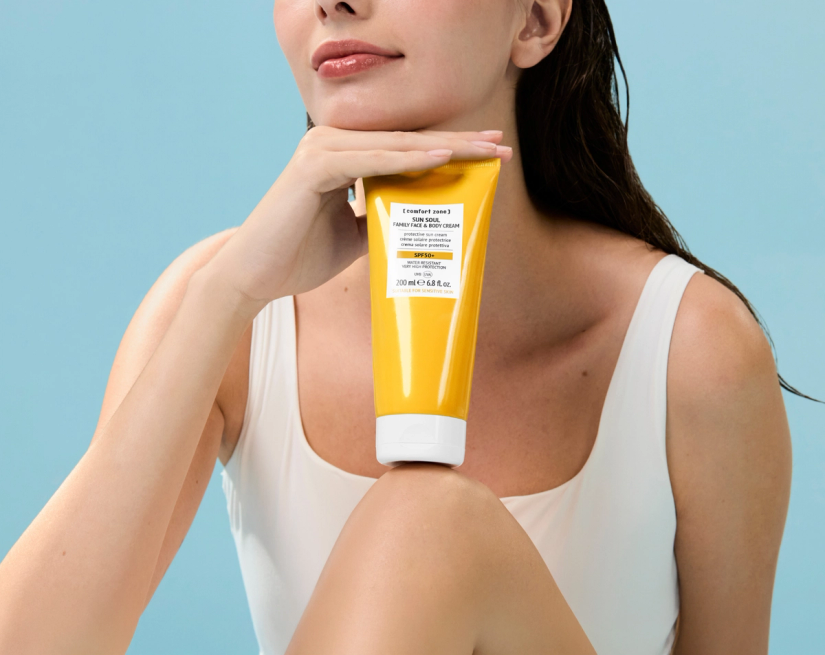
Protect: Sun Soul Face Cream SPF50+ and Sun Soul Face Cream SPF30 provide targeted facial protection, while Sun Soul Cream SPF50, Sun Soul Cream SPF30, and Sun Soul Protective Mist SPF30 offer body protection in different textures. Sun Soul Invisible Defense SPF50+ provides targeted coverage for sensitive, often-missed areas such as lips, nose, ears, and eye contour.
Restore: Sun Soul Face & Body After Sun, Sun Soul Hydraglow After Sun, and Sun Soul Aloe Gel help soothe, hydrate, and support the skin after sun exposure.
SUN SOUL transforms sun care from a single SPF step into a complete routine: prepare, protect, and restore, helping sensitive skin stay balanced before, during, and after sun exposure.
Can I use sunscreen every day if I have sensitive skin?
Yes. Sensitive skin needs daily SPF, especially because UVA rays pass through clouds and windows year-round. Choose a broad-spectrum, dermatologically tested formula and make it part of your morning routine.
Why does sunscreen burn my skin?
Burning can happen when the skin barrier is already stressed or when the formula contains ingredients your skin does not tolerate well, such as fragrance or certain filters. If it stings often, switch to a formula designed for sensitive skin and support the barrier before SPF.
Is mineral sunscreen always better for sensitive skin?
No. Mineral filters can be effective, but they are not automatically better for everyone. What matters most is the full formula: photostability, broad-spectrum protection, texture, tolerability, and how well your skin accepts it.
What SPF level do I need for sensitive skin?
Start with at least SPF 30 broad-spectrum protection. If your skin is fair, reactive, or prone to redness or pigmentation concerns, SPF 50 or SPF 50+ is the smarter choice.
What ingredients should I avoid in sunscreen if I have sensitive skin?
Be cautious with common sensitizing or debated ingredients such as oxybenzone, octinoxate, octocrylene, fragrance, acrylates, and nanoparticles. For sensitive skin, reducing potential triggers is part of protection.
How do I repair my skin after sun exposure?
Start with gentle cleansing to remove sunscreen, sweat, salt, and pollution without stripping the barrier. Then use an after-sun formula with soothing and lipid-supporting ingredients such as aloe vera, physalis angulata, abyssinian oil, or argan oil.
anti-aging face sun cream
Anti-spot face sun cream
Sensitive areas sun stick
Shimmering soothing cream
Anti-aging soothing moisturizing face and body cream